Turbopack vs Vite: Which Build Tool Should You Choose?
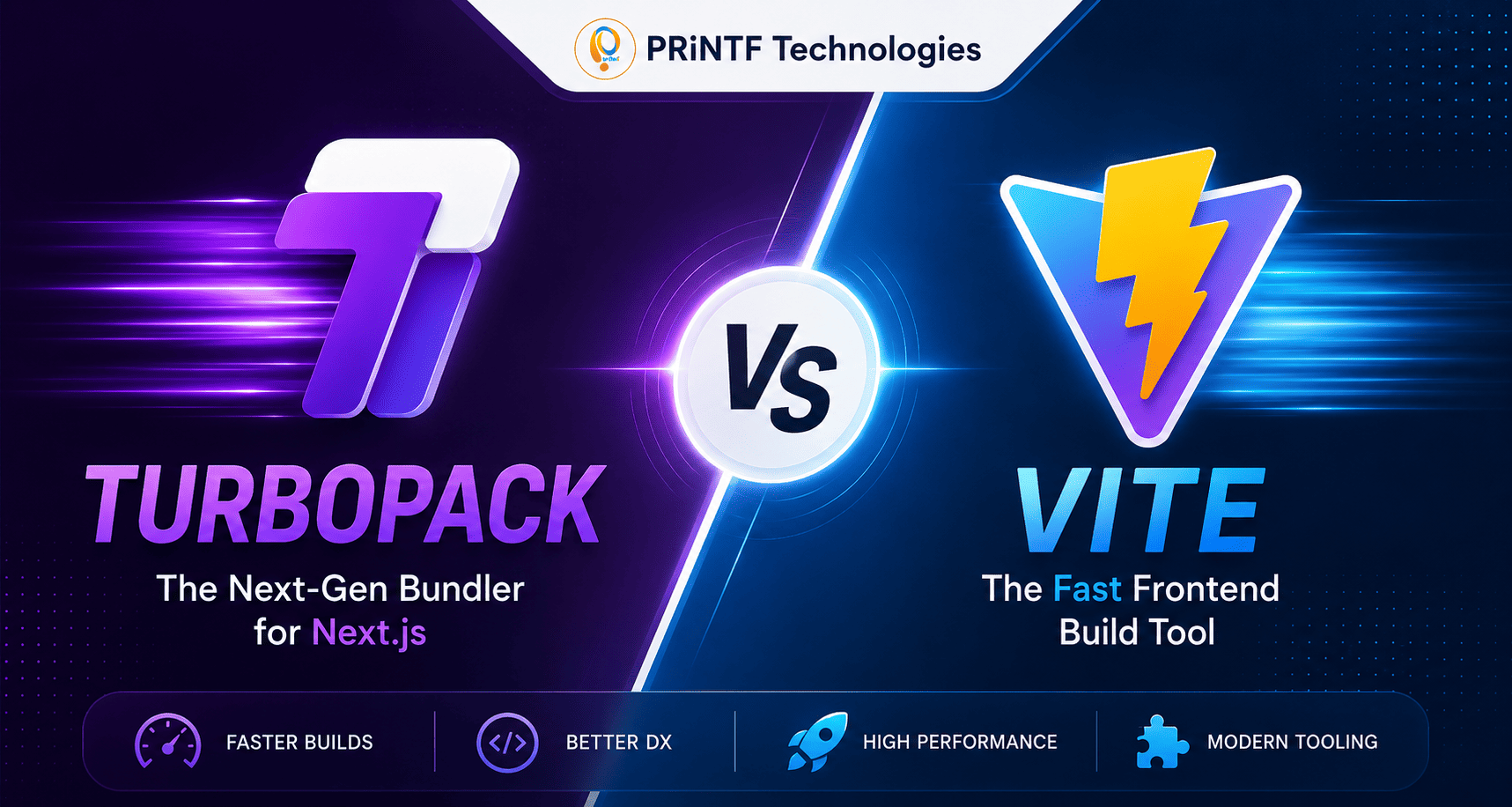
Modern web development is evolving faster than ever, and choosing the right build tool can significantly impact developer productivity, application performance, and overall development experience.
For years, Vite has been one of the most popular frontend build tools due to its lightning-fast startup time and exceptional developer experience. However, Turbopack, developed by Vercel, has quickly emerged as a powerful alternative, especially for Next.js applications.
But which one is actually better?
Let's compare Turbopack and Vite across performance, features, scalability, and real-world use cases.
What is Turbopack?
Turbopack is a next-generation bundler developed by Vercel and written in Rust. It is designed specifically for the Next.js ecosystem, focusing on delivering faster development builds, incremental compilation, and optimized performance for large-scale applications. By rebuilding only the parts of the application that change, Turbopack significantly reduces compilation time and provides a smoother development experience, especially for enterprise-level projects.
What is Vite?
Vite is a modern frontend build tool created by Evan You that prioritizes speed and simplicity. Instead of bundling the entire application during development, Vite serves source files directly using native ES Modules, allowing developers to start projects almost instantly. It supports popular frameworks like React, Vue, Svelte, SolidJS, and others, making it one of the most versatile build tools available today.
Performance Comparison
Performance is one of the biggest reasons developers compare Turbopack and Vite. Vite delivers exceptionally fast startup times and instant hot module replacement for small to medium-sized projects, making development feel incredibly responsive. Turbopack, on the other hand, is designed to scale efficiently with large codebases through incremental compilation, parallel processing, and intelligent caching. As projects grow in complexity, Turbopack's architecture helps maintain fast rebuild times and consistent performance.
Developer Experience
Both tools offer an excellent developer experience, but they approach it differently. Vite emphasizes simplicity with minimal configuration, quick setup, and a mature plugin ecosystem that supports multiple frontend frameworks. Turbopack focuses on seamless integration with Next.js, providing built-in optimizations, fast refresh, and an efficient workflow without requiring additional configuration. Developers working within the Next.js ecosystem can benefit from its deep framework integration, while those building standalone frontend applications may appreciate Vite's flexibility.
Ecosystem and Compatibility
Vite is framework-agnostic and works seamlessly with React, Vue, Svelte, SolidJS, Lit, and many other modern frameworks. Its extensive plugin ecosystem allows developers to customize projects according to their needs. Turbopack, however, is tightly integrated with Next.js and is specifically optimized for applications built using the App Router, React Server Components, and the broader Next.js architecture. This specialization enables deeper optimizations but also makes it less suitable for projects outside the Next.js ecosystem.
Build Speed and Scalability
When it comes to production builds and long-term scalability, both tools perform well in different situations. Vite offers fast builds powered by Rollup and is an excellent choice for most frontend applications. Turbopack is engineered for larger applications where incremental compilation, lazy bundling, and advanced caching can significantly reduce build times as the project grows. Teams managing enterprise-scale applications often benefit from these performance optimizations during continuous development.
When Should You Choose Turbopack?
Turbopack is the ideal choice for developers building applications with Next.js. Its tight integration with the framework, advanced compilation techniques, and optimized caching make it especially valuable for large projects that require frequent code changes and fast rebuilds. If your application relies heavily on Next.js features and long-term scalability is a priority, Turbopack provides a modern and efficient development experience.
When Should You Choose Vite?
Vite is an excellent option for developers seeking a lightweight, flexible, and framework-independent build tool. It is particularly well-suited for React, Vue, Svelte, and other frontend projects where rapid development, simple configuration, and broad ecosystem support are important. Whether you're building a single-page application, component library, or prototype, Vite delivers outstanding speed and ease of use.
Final Verdict
Both Turbopack and Vite are powerful build tools that address modern frontend development challenges in different ways. Turbopack stands out with its advanced architecture and deep Next.js integration, making it an excellent choice for large-scale Next.js applications. Vite continues to lead as a versatile and highly performant solution for a wide variety of frontend frameworks. Rather than asking which tool is universally better, the more important question is which one aligns best with your project's requirements, framework, and long-term development goals.