GPT-6 Astra: The Next Generation of AI for Coding, Research, and Computer Use
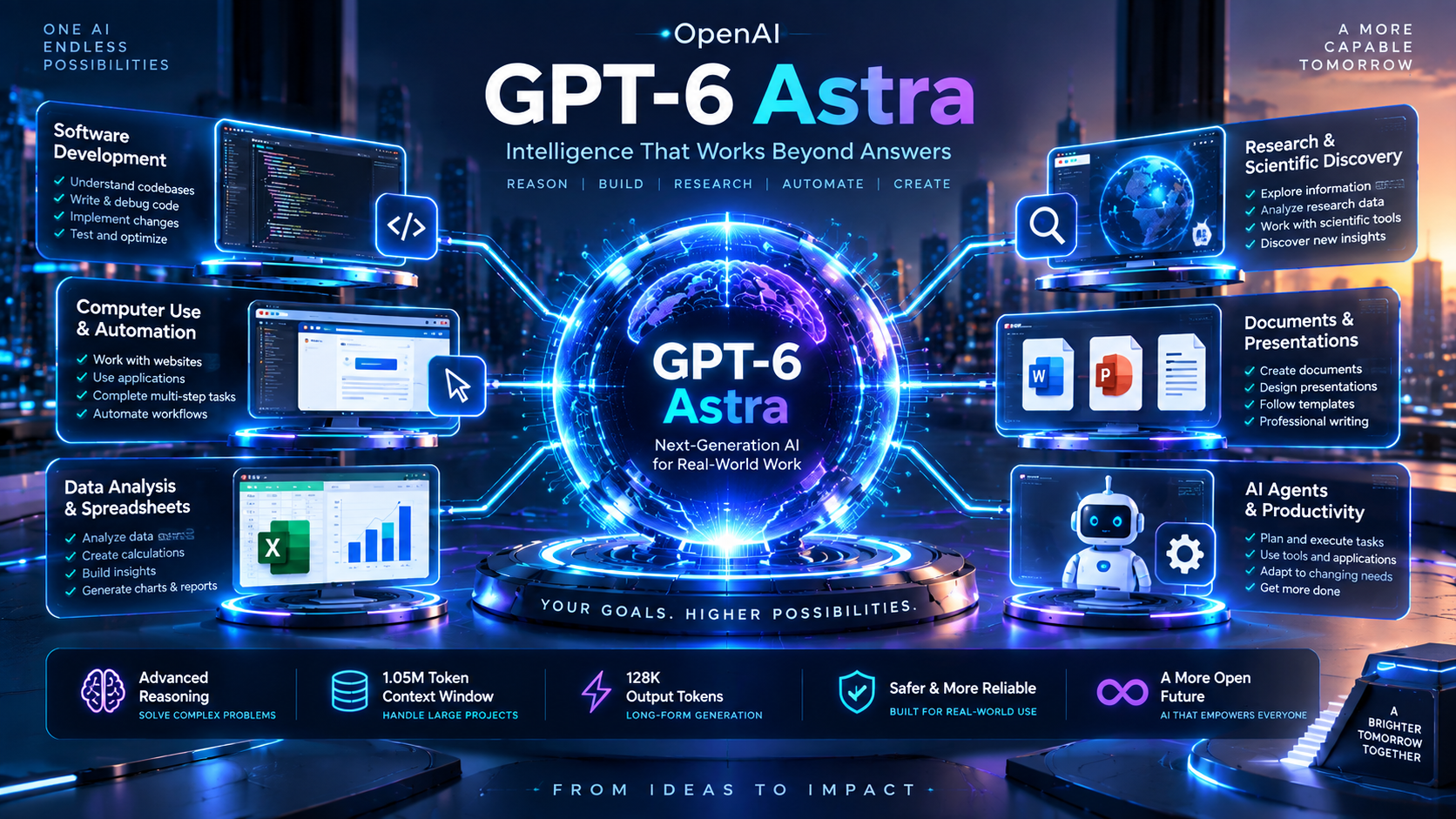
GPT-6 Astra is a next-generation AI model designed for complex reasoning, coding, computer use, research, automation, and professional knowledge work. It brings advanced AI capabilities closer to real-world task execution by combining reasoning with tools, applications, websites, and multi-step workflows.
What Is GPT-6 Astra?
GPT-6 Astra represents a new generation of artificial intelligence focused on completing complex, real-world tasks rather than simply generating answers to individual questions. The model is designed to combine advanced reasoning with practical capabilities such as software engineering, research, computer interaction, data analysis, document creation, and professional productivity.Instead of requiring users to manually divide a complicated project into dozens of smaller instructions, GPT-6 Astra is designed to understand the broader objective and work through multiple steps toward the desired result. This makes the technology particularly useful for developers, researchers, businesses, analysts, and professionals who regularly work with complex digital workflows.The importance of GPT-6 Astra is not only its ability to produce high-quality text or code, but its ability to connect reasoning with tools and actions. This moves AI closer to becoming an active digital work partner capable of understanding a task, determining what needs to happen, working with relevant information, and adapting when requirements change.
Advanced Computer Use
One of the most significant developments associated with GPT-6 Astra is advanced computer use. Instead of limiting AI to a conversational interface, computer-use capabilities allow AI agents to interact with digital environments such as websites, applications, dashboards, and other graphical interfaces.This capability can be especially valuable for repetitive and multi-step digital workflows. An AI agent could potentially navigate a website, locate relevant information, interact with forms, move between different application screens, perform required actions, and verify whether the task was completed successfully.
GPT-6 Astra for Software Development
GPT-6 Astra is designed to support advanced software engineering workflows that go far beyond simple code generation. Modern software development involves understanding existing codebases, analyzing architecture, finding bugs, implementing changes, running tests, reviewing results, and maintaining compatibility with the rest of the application.An advanced AI coding system can assist developers throughout these different stages. Rather than generating an isolated function and leaving the developer to integrate it manually, GPT-6 Astra can be used as a development partner that understands the larger context of a project and helps reason through technical problems.For frontend developers, this can include analyzing existing interfaces, improving layouts, identifying UI problems, and helping implement responsive designs. For backend development, AI can assist with APIs, application logic, data processing, debugging, testing, and system architecture.
AI-Powered Research and Scientific Work
Research is another area where advanced AI models can provide significant value. Research projects often involve collecting information from multiple sources, understanding large amounts of material, analyzing data, comparing results, testing ideas, and deciding which direction to investigate next.GPT-6 Astra is designed to combine advanced reasoning with tools and computer interaction, creating opportunities for more sophisticated research workflows. Instead of only summarizing information, an AI system can assist with the process of investigating a problem and organizing the information required to make informed decisions.
Professional Productivity
GPT-6 Astra can also transform how professionals approach everyday knowledge work. Modern office workflows often require people to move between documents, spreadsheets, presentations, research platforms, communication tools, databases, and business applications.Traditionally, each application requires separate manual actions. A professional may collect information in one application, analyze it in a spreadsheet, write a report in another application, and finally create a presentation from the same information. This process can consume significant amounts of time.
What GPT-6 Astra Means for the Future
The development of GPT-6 Astra represents a broader shift in the direction of artificial intelligence. AI is moving beyond simple content generation toward systems capable of reasoning about objectives, using digital tools, interacting with applications, analyzing information, and completing increasingly complex workflows.This evolution could change the way people build software, conduct research, analyze business information, create professional documents, and manage everyday digital work. Instead of treating AI as a separate tool that users open only when they need an answer, AI could increasingly become an integrated layer within the applications and workflows people use every day.
Large Context for Complex Projects
For developers, larger context can help AI understand more of an existing codebase and reduce the need to repeatedly explain the same project background. For researchers, it can make it easier to work with large collections of documents and research materials.Large-context AI can also be useful for businesses working with lengthy reports, product specifications, contracts, customer information, financial analysis, and internal documentation. The more relevant context an AI can effectively handle, the more useful it can become for complex professional workflows.
The Rise of AI Agents
GPT-6 Astra reflects the broader transition from conversational AI toward intelligent AI agents. Traditional AI assistants primarily respond to questions, generate content, or provide recommendations. AI agents are designed to go further by understanding an objective, planning actions, using tools, interacting with software, evaluating results, and continuing until the task is completed or requires human input.This change could significantly affect how people use artificial intelligence. Instead of asking an AI how to perform a task and then completing every step manually, users can increasingly delegate portions of the workflow to an AI agent.