Why Defence Organizations Need Secure Document Management Systems
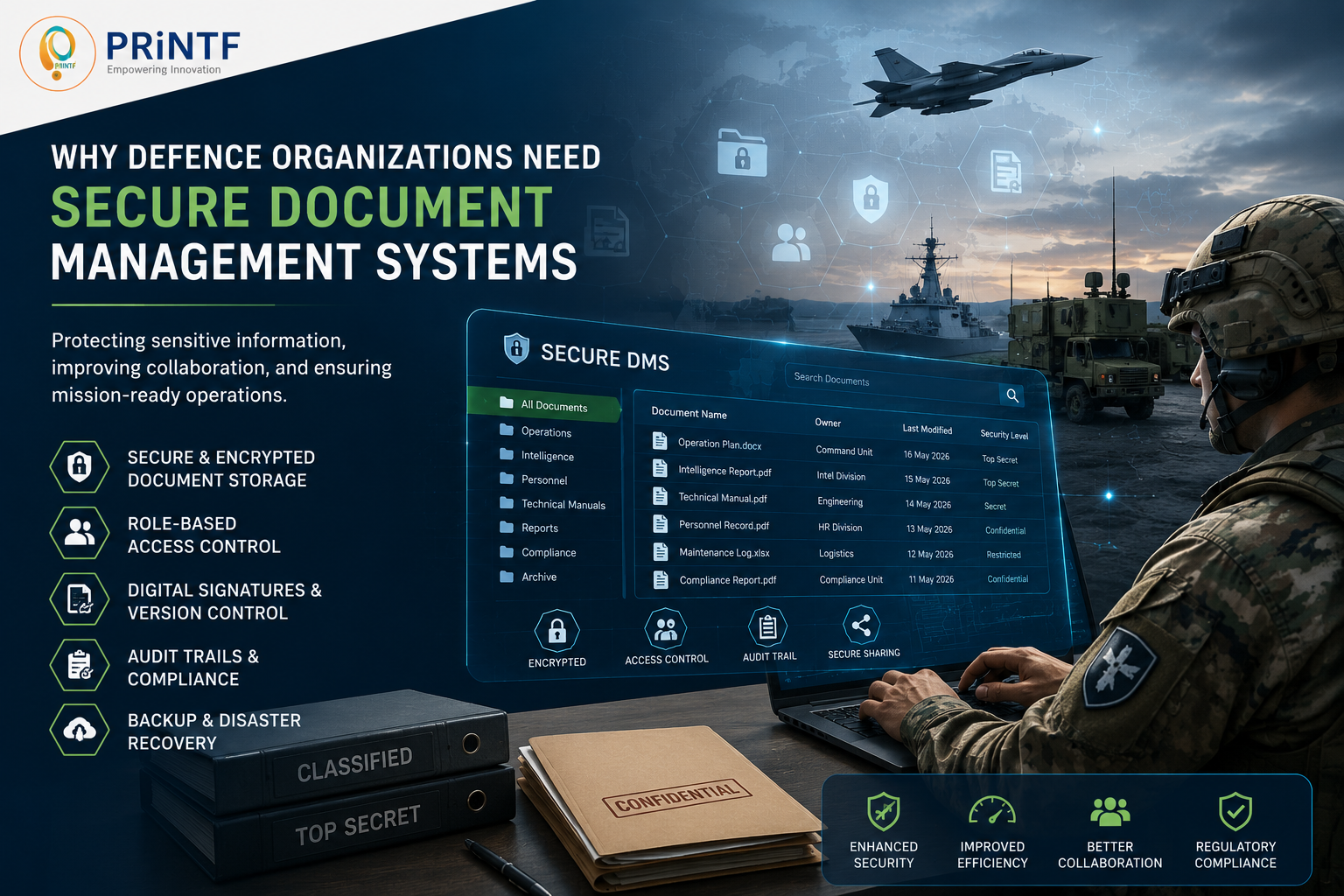
The Growing Need for Secure Document Management
Modern defence operations generate thousands of digital files every day. These include:
Mission planning documents
Intelligence reports
Personnel records
Equipment maintenance logs
Procurement contracts
Training manuals
Technical blueprints
Communication records
Without a secure document management solution, these files can become difficult to organize, track, and protect.
As cyber threats continue to evolve, defence organizations need systems that can safeguard confidential information while allowing authorized personnel to collaborate efficiently.
Key Challenges Faced by Defence Organizations
1. Handling Highly Classified Information
Military documents often contain confidential or classified data. Unauthorized access could compromise national security and military operations.
A Secure DMS ensures that only authorized personnel can access sensitive information through strict permission controls.
2. Cybersecurity Threats
Defence organizations are prime targets for cyberattacks, including:
Data breaches
Ransomware attacks
Insider threats
Unauthorized data theft
Malware infections
A secure DMS uses advanced encryption, secure authentication, and continuous monitoring to reduce these risks.
3. Large Volumes of Documents
Every defence department generates thousands of files each month.
Managing these documents manually becomes time-consuming and increases the chances of losing important records.
A digital DMS organizes documents automatically using folders, categories, metadata, and intelligent search capabilities.
4. Collaboration Across Departments
Military operations involve multiple departments working together.
These may include:
Intelligence teams
Logistics
Operations
Procurement
Engineering
Administration
A secure DMS allows controlled document sharing without compromising security.
5. Regulatory Compliance
Government and defence organizations must follow strict regulations regarding:
Data retention
Document auditing
Information security
Access management
Record preservation
A Secure DMS simplifies compliance by maintaining complete audit logs and secure storage.
Essential Features of a Secure Defence Document Management System
Advanced Encryption
All documents should be encrypted both during storage and while being transferred across networks.
Encryption protects files even if unauthorized access is attempted.
Role-Based Access Control (RBAC)
Not every employee should have access to every document.
Role-based permissions ensure that:
Commanders access strategic documents
HR teams access personnel records
Engineers access technical documents
Procurement officers access contracts
This minimizes internal security risks.
Multi-Factor Authentication (MFA)
Passwords alone are no longer sufficient.
Secure login should include:
Password
OTP verification
Smart cards
Biometric authentication
This significantly improves system security.
Complete Audit Trail
Every action performed on a document should be recorded.
Examples include:
Who viewed the document
Who edited it
Who downloaded it
Who shared it
Date and time of access
Audit logs improve accountability and simplify investigations.
Secure File Sharing
Sensitive documents often need to be shared with authorized personnel.
A Secure DMS allows:
Password-protected sharing
Expiration dates
Download restrictions
View-only permissions
Secure sharing links
This reduces accidental data exposure.
Version Control
Military documents frequently undergo revisions.
Version control helps users:
Track changes
Restore previous versions
Prevent duplicate copies
Maintain document history
Fast Document Search
Finding critical documents quickly during military operations is essential.
Advanced search features allow users to locate files using:
Keywords
File names
Metadata
Categories
Dates
OCR text search
This improves operational efficiency.
Benefits of Secure Document Management Systems
Improved National Security
Protects classified military information from unauthorized access and cyber threats.
Faster Decision-Making
Quick access to mission-critical documents enables commanders to make informed decisions faster.
Better Operational Efficiency
Automation reduces paperwork and manual processes, allowing personnel to focus on strategic tasks.
Reduced Risk of Data Loss
Automatic backups and disaster recovery ensure important documents remain protected.
Enhanced Collaboration
Authorized teams can securely collaborate from different military bases and command centers.
Cost Savings
Digital document management reduces expenses related to:
Printing
Paper storage
Physical archives
Manual document handling
Regulatory Compliance
Built-in compliance features simplify government audits and policy enforcement.
Real-World Use Cases
A Secure DMS can support multiple defence operations, including:
Military headquarters document management
Border security records
Defence procurement documentation
Training material distribution
Equipment maintenance records
Intelligence report management
Personnel file management
Secure inter-department communication
Emerging Technologies Enhancing Defence DMS
Modern defence document management systems are increasingly integrating advanced technologies:
Artificial Intelligence (AI)
AI helps automate document classification, extract information, detect anomalies, and improve search accuracy.
Optical Character Recognition (OCR)
OCR converts scanned paper documents into searchable digital files, making historical records easier to access.
Blockchain Technology
Blockchain creates tamper-proof records for highly sensitive documents, ensuring authenticity and integrity.
Cloud-Based Secure Storage
Private and government-approved cloud infrastructure enables secure access while maintaining strict security controls.
Zero Trust Security
Zero Trust ensures every user and device is continuously verified before accessing sensitive information, reducing the risk of unauthorized access.
Best Practices for Defence Organizations
To maximize document security, organizations should:
Implement role-based access control.
Enable multi-factor authentication.
Encrypt all stored and transmitted documents.
Perform regular security audits.
Maintain automated backups.
Monitor user activity continuously.
Update security policies regularly.
Train personnel on cybersecurity awareness.
Secure mobile and remote access.
Conduct regular penetration testing.
Conclusion
As defence organizations continue to digitize their operations, protecting sensitive information has become more critical than ever. A Secure Document Management System provides a robust foundation for safeguarding classified documents, streamlining workflows, improving collaboration, and ensuring compliance with strict security regulations.
By integrating technologies such as AI, encryption, role-based access control, OCR, and Zero Trust security, modern document management systems help defence organizations operate more efficiently while protecting national security. Investing in a secure DMS is no longer just a technology upgrade—it is a strategic necessity for any defence organization committed to operational excellence and information security.